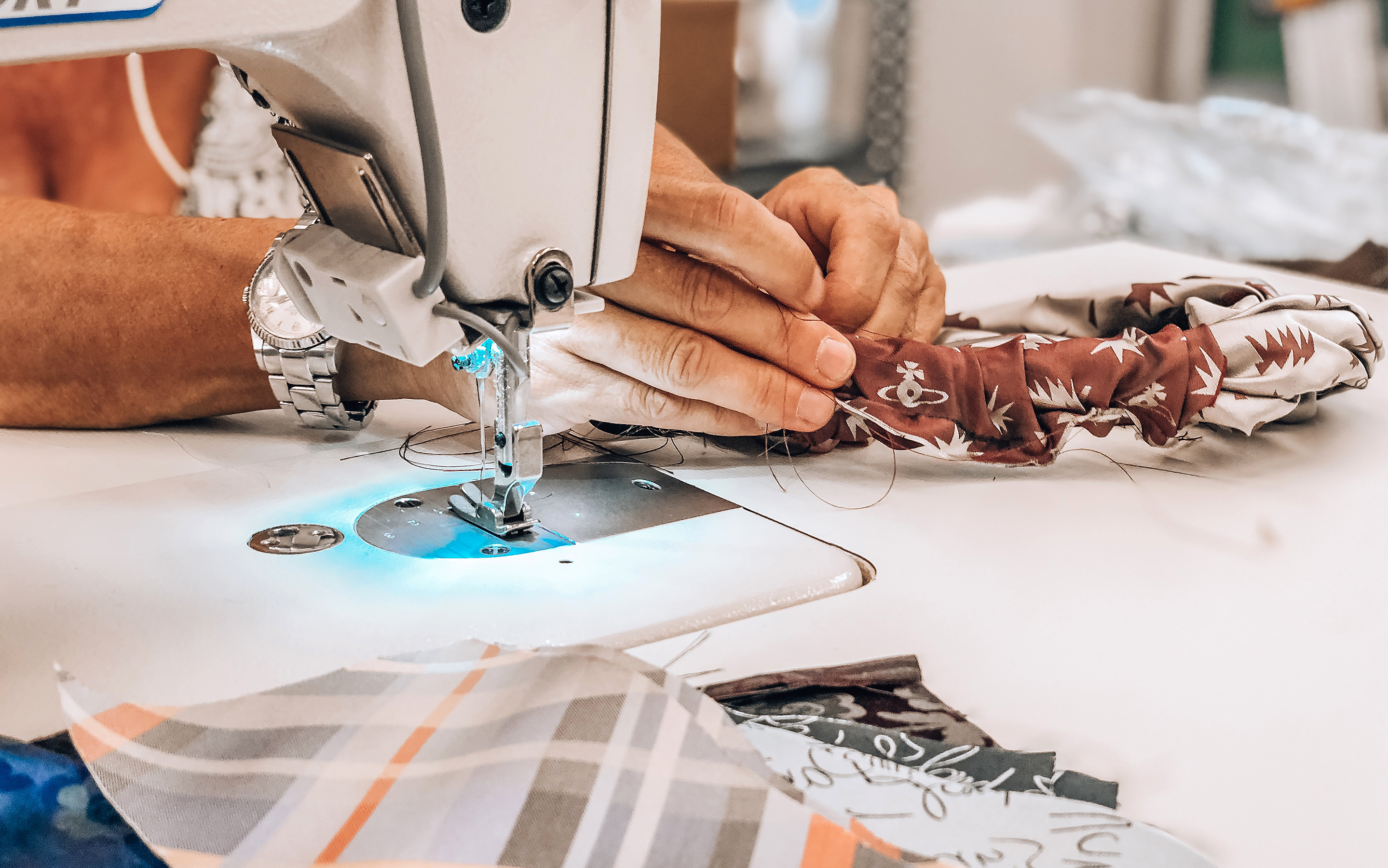
For sourcing and manufacturing, our sourcing teams plan material procurement carefully to align with expected demand and minimise excess wherever possible. When we do have unavoidable leftover material, our first priority is to reintroduce the material back into the design stage for upcoming collections, for example as lining fabric or as a base for new seasonal prints, or special projects. To support our approach to preventing and minimising waste, all surplus Vivienne Westwood Group owned products and unused materials from production and sampling are organised for reuse, upcycling, recycling, or donation to charitable organisations, where appropriate.
Goods which for diverse reasons were not sold through our main channels, are distributed through our outlet stores and public sample sales. We are currently exploring additional solutions for damaged stock or items unsuitable for resale, working with external partners to extend the useful life of these materials.
The initiatives described reflect our current practices and ongoing efforts to reduce surplus and waste. While we aim to maximise reuse, recycling, and donations, not all materials or products can currently be repurposed. We are working to improve tracking and will report measurable progress as data becomes available, to ensure our communications remain transparent and accurate.
Find out more about these initiatives below.
In September 2023, we have started a pilot project which will involve three suppliers and two of our fabrics. The goal of this project is to collect production offcuts and scraps from the manufacturing of our garment and regenerate them into new materials that can be used for new products.
Within the upcoming AW25 season, this project will be introduced into our RTW mainline collection through the Winston Coat. We are introducing a limited-run coat made from a 50% pre-consumer recycled wool and 50% virgin wool. The recycled wool is sourced from production scraps and leftover materials from our manufacturing process, which have been collected and reprocessed by one of our suppliers. Virgin wool has been added to meet yarn strength and processing requirements, ensuring durability and long-term wear. Due to the finite supply of pre-consumer material, this product will be part of a limited run.
For Vivienne Westwood it is important to support education, foster creativity and allocate resources accordingly. It is important to boost future generations in their endeavor to evolve the current fashion industry. Therefore, we work with multiple universities, supporting a diverse range of projects.
From our London studio, we work with local universities, supporting emerging designers by giving them hands-on access to special materials, while helping our studio reduce unused inventory. Donating leftover material not only gives a second life to our scraps and samples, it benefits students in the early stages of building careers in the fashion industry.
Since 2021, Vivienne Westwood Italy, our product development and production hub, has been part of the Monitor for Circular Fashion.
This multi-stakeholder initiative brings businesses together to share circular fashion best practice, promoting technical, managerial and scientific skills with a view to contributing to the transition towards circular business models. Vivienne Westwood Italy contributes to the development Monitor for Circular Fashion’s yearly report.
In partnership with the Monitor for Circular Fashion and SDA Bocconi, we are developing a trial product to assess the possibility of a fully circular product. Considerations include circular design principles, raw material sourcing, manufacturing, transport and logistics, distribution and end-of-life. In September 2023, this pilot project has been presented to the representatives of the EU Commission and UNECE.
Founded in 2013, Progetto Quid offers employment and career opportunities to those who would otherwise be at risk of exclusion, marginalisation and discrimination in the labour market, with particular attention to women.
As well as being an independent brand, Quid acts as a supplier to Italian and global fashion and lifestyle companies, with specific product lines of accessories and co-branded garments. Through an innovative and hybrid business model, Quid aims to catalyse systemic change by creating social and environmental impact partnerships thinking every day of environmental projects, that reuse surpluses, safeguard the environment and enhance people’s lives and livelihoods.
Progetto Quid has also offered training courses for new hires from marginalised backgrounds, including resources for progression in the workplace and specialisation. There are also mentoring and training programs in place and coaching on inclusive leadership. In 2022, a total of 469 hours of coaching and professional development were provided for 112 beneficiaries.
Progetto Quid has also offered training courses for new hires from marginalised backgrounds, including resources for progression in the workplace and specialisation. There are also mentoring and training programmes in place and coaching on inclusive leadership. In 2022, a total of 469 hours of coaching and professional development were provided for 112 beneficiaries.
We have been working with Progetto Quid since 2021 to give a second life to our leftover materials and to support their endeavour of helping people from marginalised backgrounds get stable and continuous work.
Find out more about Progetto Quid here.
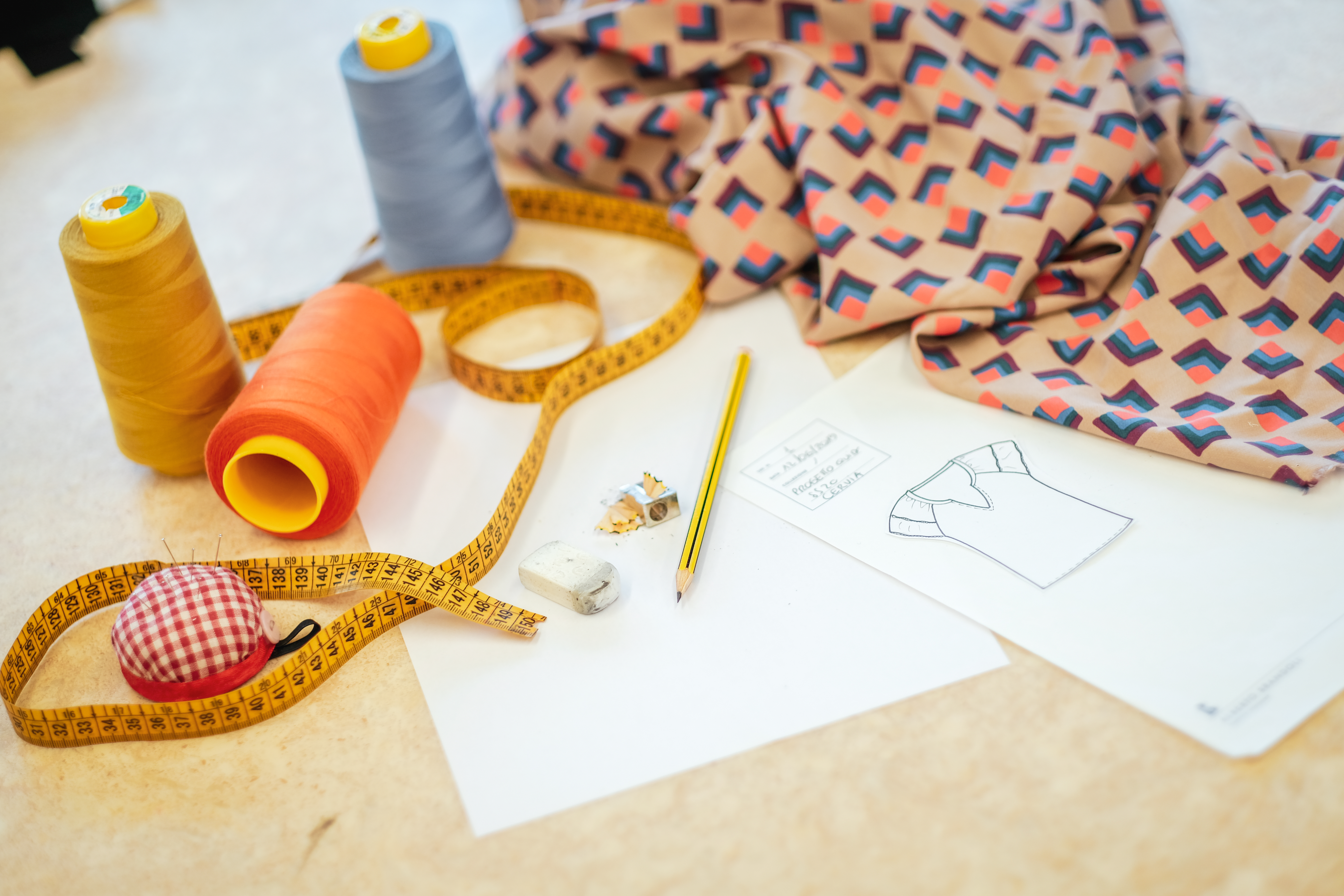
Greenline is a company specialising, amongst others, in the collection and recycling of textile waste. Where our leftover materials are unusable for donation or internal reuse, we sell these to Greenline who recycle material scraps into new raw materials. These newly generated raw materials are then sold on for use in different industries. In 2021, a total of 2,996.9KG of our leftover materials, such as cotton, wool and linen, have been sold to Greenline, who recycled into new materials, almost exclusively for reuse in the automotive industry. In 2022, a total of 3,816 meters of our leftover materials, such as cotton, wool and viscose have been sold to Greenline.